
what is boccia?
Boccia is a target ball sport where the aim of the game is to get your balls closer to the target white ball (called the jack) than your opponents balls. With the game being designed for people with physical disabilities, players can either throw, kick or propel the balls onto the court using an assistive device called a ramp. It is one of the world’s most inclusive sports where everyone plays on an equal playing field, and skill, strategy and accuracy are critical to win.
Boccia is played indoors on a smooth surface such as basketball or badminton flooring. Boccia can be played in individual, pairs and teams events. One player/team plays with 6 red balls and the other player/team with 6 blue balls competing to get closer to the jack. A Boccia game consists of 4 ends and a tie-break end if needed.
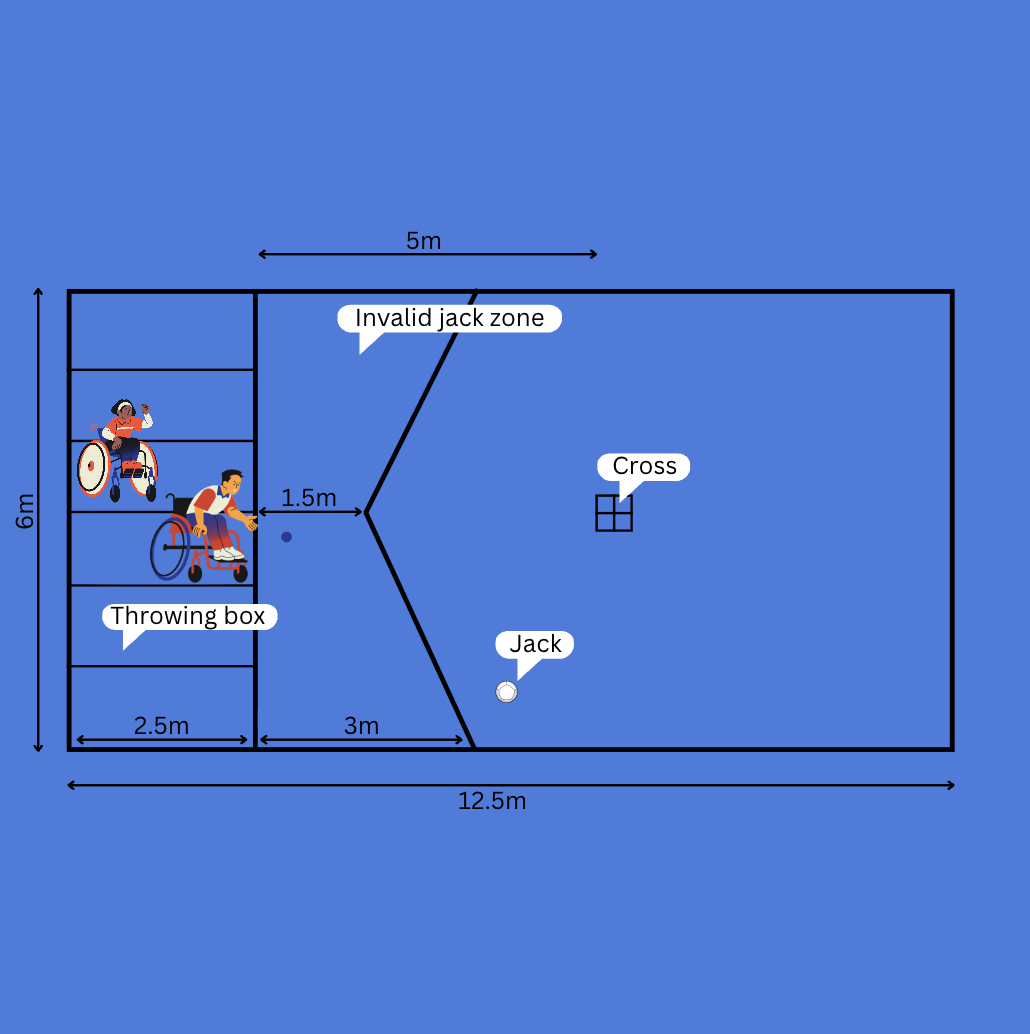
Boccia can be played by people of all ages and ability levels. In Australia, people with a range of disabilities can play boccia, from severe physical disabilities to high-functioning ASD athletes. When competing internationally, athlete’s ability to participate is restricted to those with specific physical disabilities to create an even playing field, this is known as classification. In Australia, we have six classifications:
Who can play boccia?
BC1
Players with coordination impairments such as cerebral palsy and acquired brain injury. Players have a sport assistant who helps them to stabilise, maneuver and passes them the ball.
BC2
Players with coordination impairments such as cerebral palsy and acquired brain injury. Players are able to independently maneuver, pick up and throw the ball.
BC3
Players who have the most significant limitations in their arms, torso and legs from conditions such as cerebral palsy, muscular dystrophy or spinal cord injury. Players use a ramp and have a ramp operator as an assistant to propel the balls onto the court.
BC4
Players with restricted movement or weakness in their arms and legs, for example from spinal cord injury, muscular dystrophy or limb deficiency in all four limbs. Players are able to pick up, throw the ball and maneuver their chairs independently during play.
BC5 (within Australia only)
Players with restricted movements or co-orientation difficulties in their arms, legs and torso.
Open (within Australia only)
Players with all other types of qualifying disabilities.
Equipment
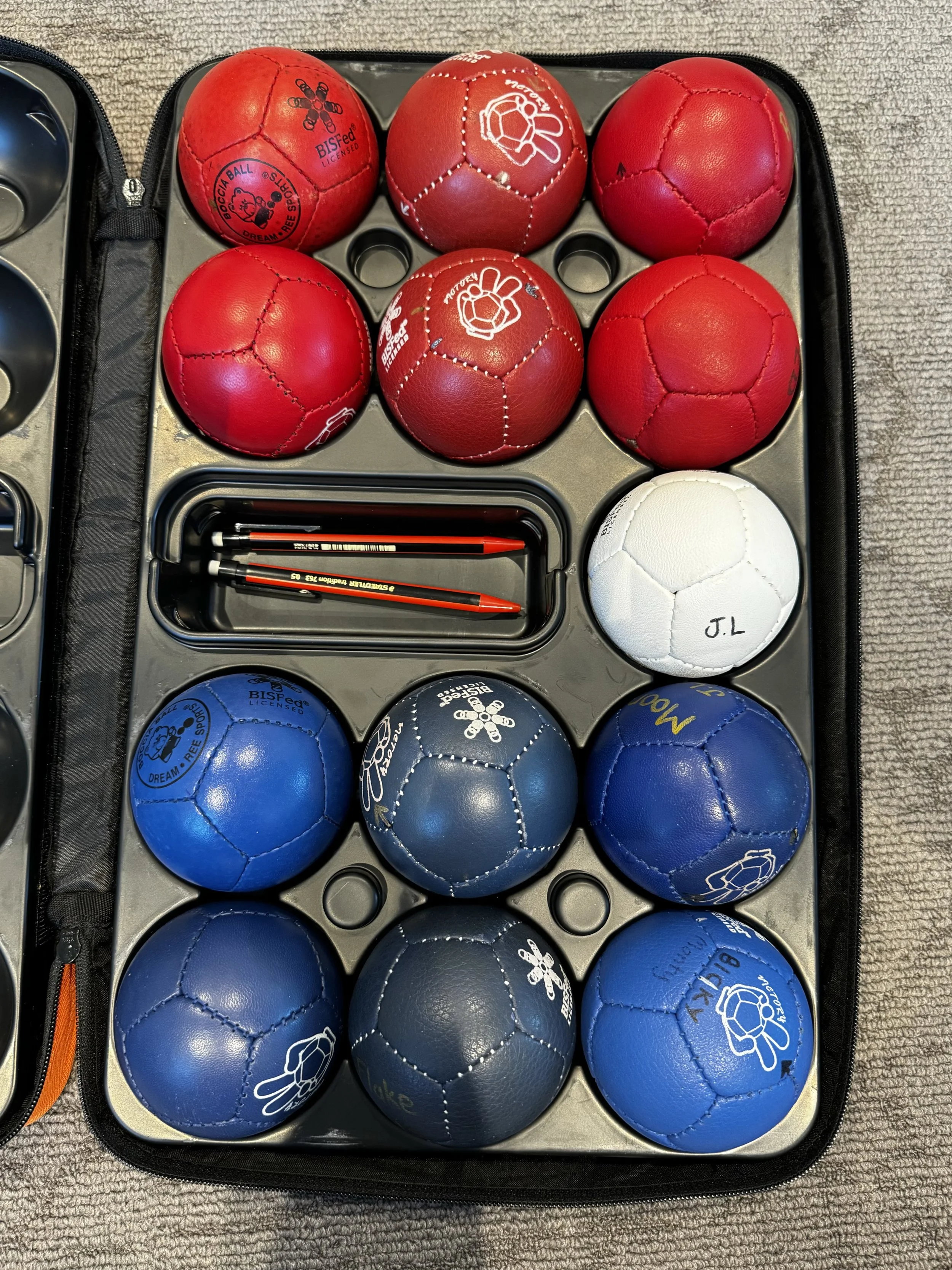
Boccia balls come in a set of 13 balls, 1 jack, 6 red and 6 blue. They can range in hardnesses from super soft like a beanbag to super hard like a cricket ball.
boccia balls
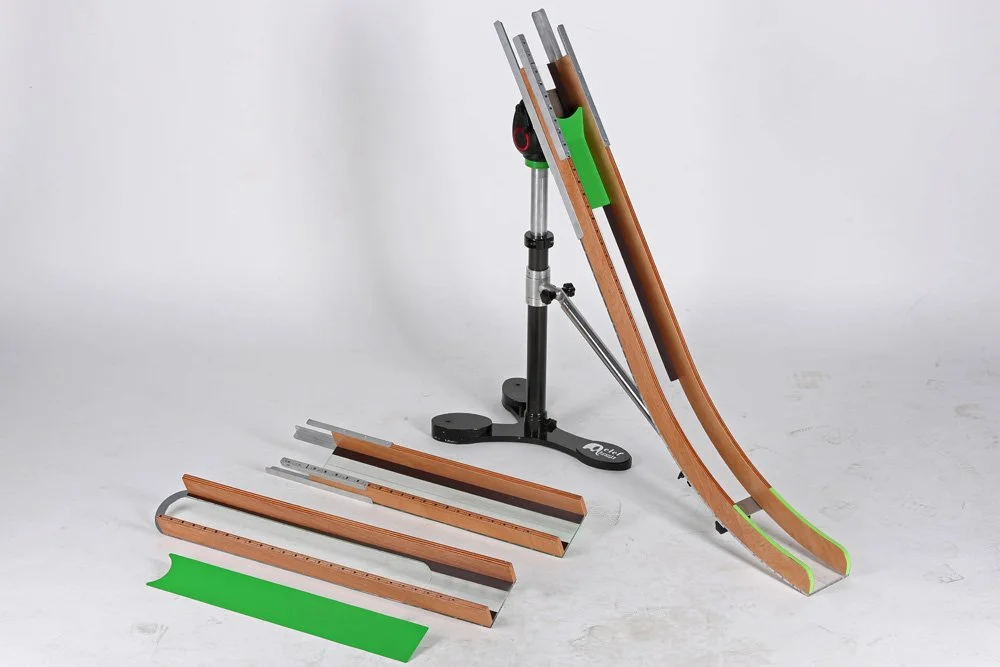
Boccia ramps are used by BC3 players to propel the ball onto the court. Extension pieces can be added to the ramp to make the balls roll further and faster.
ramp
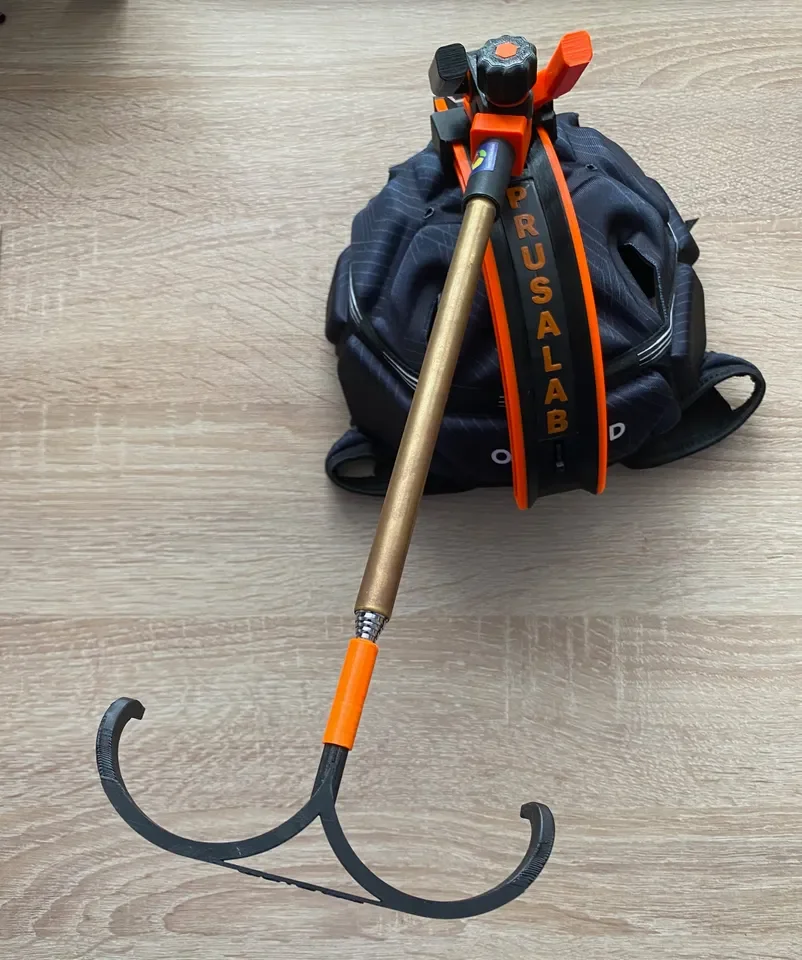
Pointers are also used by BC3 players to assist with releasing the ball from the ramp. Pointers can be designed to suit the needs of every player, by having head attachments, mouth pieces or a handle to be held by the athlete.